

” Have peace now, until morning. Heed no nightly noises. For nothing passes door and window here, save moonlight and starlight and the wind off the hill-top.” -Goldberry, The Fellowship of The Ring.
For those who have been so unfortunate as to have read J.R.R. Tolkien’s The Lord of the Rings only after seeing the Peter Jackson movie adaptations, your most favourite revelation in the vast and masterful world of Middle-Earth must’ve been the existence of the character, Tom Bombadil and his wife, Goldberry.
As I got to know these newly discovered characters, I became enthralled. Only Peter Jackson would know why he didn’t include the beloved characters in the original motion picture, but I am not here to berate his work, as I think he did a wonderful job putting such a big story into three engaging film instalments.
However, I am still cheerful to have stumbled upon Tom Bombadil. While reading about him in the story, an insight struck me. I was basically reading the moderner’s or pilgrim’s guide to a happy life. But before I get into any of that, I’d better explain who this cheerful character is and why he may have timeless lessons for our learning.
Tom Bombadil and Goldberry.

The famous plotline of The Lord of the Rings follows the adventures of Frodo Baggins as he traverses the land of Middle-Earth to destroy a powerful weapon (The One Ring) and defeat the enemy, the Dark Lord Sauron. Many things occur on this adventure, and one of them includes his meeting with Tom Bombadil. Tom is an ageless man, it seems, who takes care of the woods, waters, and hills. In other words, he looks after the whole of nature. To rest awhile from the weary journey, Frodo and his travel companions are invited by Tom to stay for some time in his home. During their stay, the travellers meet his wife, Goldberry, who is told to have the most enchanting countenance. For a little while, they find peace, rest, and rejuvenation.
The Characters as a symbol.
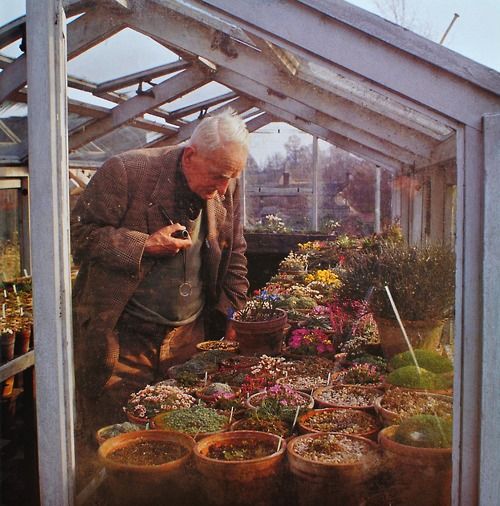
Tom Bombadil is actually an allegory for things that the author, Tolkien, held dear to himself: One being the spirit of the English (Oxford) countryside -lush, warm, pure, alive, and cheerful. Moreover, in the story, Tom names himself the Eldest, hinting at the purity and childlikeness of his heart -because what is first in a succession of things is the purest and simplest of them all.
” … I am old. Eldest, that’s what I am. Mark my words, my friends: Tom was here before the river and the trees; Tom remembers the first raindrop and the first acorn. He made paths before the Kings, and saw the little People arriving. He was here before the Kings and the graves and the Barrow-wights. When the Elves passed westward, Tom was here already, before the seas were bent. He knew the dark under the stars when it was fearless -before the Dark Lord came from Outside.“
-Tom Bombadil.
Does that remind you of a certain Biblical or historical figure? I think of Adam, the first man, in all his preternatural innocence and gaiety before the evil fall. And Goldberry (like Eve) is said to be just as charming. She is the picture of a fertile, receptive, and nurturing being -the epitome of the feminine.
In the beginning, there was man and woman. Both lived in harmony and had a happy life. They knew no evil. They were pure, and their relationship was of pure love.
That being said, there might be some lessons to take away by looking into their home of warmth.
Unity in the house of Tom Bombadil.

Even without being there in person (of course, it’s just a story), one can get a sense of the immense homeliness of Tom Bombadil’s house. Despite all the singing and merriment, there is one factor that single-handedly offered this much enchantment to his home: Unity between the masculine and feminine.
Have you ever been in a home where the man and his wife are in constant argument? I have, and trust me, the home ceases to be a home in all cases. You feel every time that perhaps you should leave the place. Something always feels awry, as it would in a house divided. Tension takes the place of relaxation, and far from being peaceful, you feel like you must always be on defense -even when the argument has nothing to do with you.
On the contrary, in a house united, all you may want to do is lie back and laugh -literally. To have no worries, even if, in reality, you do. You almost feel obliged to let all those anxieties go away.
That’s just what I sensed while reading the delights of Tom’s house. The chapter tells of Tom and Goldberry’s harmonious work, and none envied the other. Both loved each other for their worth and not their work. Goldberry was proud of her husband; and Tom was proud of, as he would say, his pretty lady. What bliss to see that before your eyes!
Unfortunately these days, man and woman have grown to envy each other. Neither are enchanted with each other’s mysteries. Now, the popular sermon is: ‘Men and women are exactly the same’, ‘Nothing to see here’, ‘Men have nothing to protect. Women have nothing to nurture’, ‘The one is just as the other’…
How glum. No expression of diversity in the way God made us. Many a home has been ripped in two because the man is pulling it one way, and the woman is pulling it the other. Admiration is now envy. No enchantment, just strife.
But if there’s one thing I learned from Tom and Goldberry, it’s that the secret to a happy life is, first and foremost, the union of the masculine and feminine. That’s the foundation. If you keep envying men (or women), you can never be happy, because to be so would be to change your very DNA.
The master key is to be one. Not legion.
Devotion in the house of Tom Bombadil.

Speaking of union between man and woman, the union must be genuine. Not just a kind of, ‘I’m putting up with you for the sake of harmony’. We all know that never works. It equally makes life into a hell, just in a much more quieter way. Devotion must exist -devotion to God, your work, and your neighbour.
A chapter exists where, in an almost trance-like state, Tom sings of his wife:
“I had an errand there: gathering water-lilies, green leaves, and lilies white to please my pretty lady, the last ere the year’s end to keep them from the winter, to flower by her pretty feet till the snows are melted. Each year at summer’s end, I go to find them for her, in a wide pool, deep and clear, far down Withywindle; there they open first in spring, and there they linger latest. By that pool long ago, I found the River-daughter, fair young Goldberry, sitting in the rushes. Sweet was her singing then, and her heart was beating!“
-Tom.
Goldberry had also sang like praises of her husband.
Now, not every woman has a man as generous and poetic as Tom Bombadil; and not every man has a woman as charming as Goldberry. We live in a fallen world, not a fairytale. Plus, even if you love someone, life and its hardships can often strip you of time to sing love songs, poetry, and compliments to your spouse or friend. However, it is important to note, especially in such an intimate relationship as marriage, that the key to happy living is to try to find the good attributes of the other and focus on that, even if just quietly. And the good thing with the virtue of devotion is that it does exclude love to the easy times. We must all learn to be devoted to our duties as husband, wife, citizen, child of God, etc., even when the object does not seem loveable.
That, I say, is true devotion. This can reap nothing but happiness because all virtue comes from God who loved us first. When you are always happy and devoted on the inside, love songs do not be sung. You’ll radiate so much love from you that it’ll almost be blinding to your neighbours, both friend and foe.
” There is the great lesson of ‘Beauty and the Beast’, that a thing must be loved before it is lovable.”
– G.K. Chesterton.
Responsibility -without obsession- in the house of Tom Bombadil
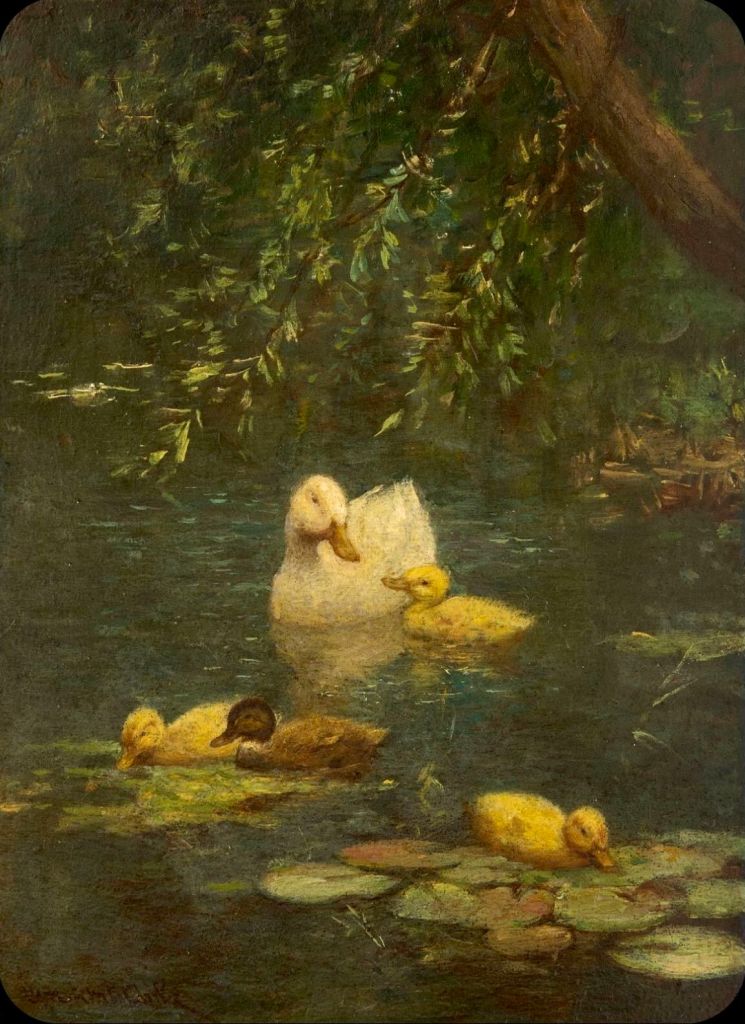
Perhaps, one of the most loveable things about Tom’s house is the sweet balance of security and childlike leisure. As you see in today’s world of businessmen and businesswomen, mostly rushed and sleepless because of the responsibility of maintaining work, there has been a psychological development of workaholism in our minds. Most -especially myself- find it taboo to be free and have spare time. Always constantly looking to be busy and loathing the business at the same time.
But one of the lessons I found while reading about Tom’s abode is that your business will never be worth it if you do not realize why you keep it in the first place. In other words, you should work to live -not the other way round.
Tom sure had a mighty responsibility. He was responsible for taking care of nature and ensuring their smooth running. He was tasked with being a steward of the earth and of his wife, and he did it so well. But as Goldberry said of him:
” Old Tom Bombadil is a merry fellow. Bright blue his jacket is, and his boots are yellow…
The trees and grasses, and all things growing or living in the land, belong each to themselves. [But] Tom Bombadil is the Master. No one has ever caught old Tom walking in the forest, wading in the water, leaping on the hill-tops under light and shadow. He has no fear. Tom Bombadil is master.”
-Goldberry.
‘All things growing belong to themselves…’
I suppose that statement sums it up. You can keep life’s business running without obsessing over it. Because one day, we shall depart this earth and someone else will replace us. The world will keep going long after us, and even if our duty now is to engage with the cares and worries of the day, we must look to more eternal things as the final goal.
All things growing belong to themselves, and God is Master. So, as a poor little human being, I only need do my part, do it well, and leave time to be happy!
Hospitality in the house of Tom Bombadil.

Hospitality, like all other natural virtues of human beings, is one more thing that has become commercialized. That is, ‘As long as I’m not getting paid, why should I care?’. We are all guilty of it -that individualism that reduces society into a cold working machine. Moreover, because of the structure of our society today, we may not have the opportunity to host, out of the blue, unknown strangers in our home -most times, for very good reasons. However, this does not excuse modern man from being hospitable -perhaps with our time and resources. Yes, we are individuals, but we also form a society.
I will not go along telling you about how hospitable Tom and Goldberry exhibited themselves to be in the story. I have already hinted at that earlier. But the significant lesson I noted was that a selfish life makes an unhappy life.
You may not be a philanthropist or a humanitarian, but there are small ways you can make a difference in society -either on the individual or on the communal scale. There is this lie today that unless you are raging activist, you are not making good of yourself. But in the history of the world, society has mostly been changed or made better by silent working. Or, as you may have heard, by the creative minority:
A man quietly doing his business (whatever that may be) properly. A nun or priest muttering prayers and offering sacrifices to God in a cloister or chapel. A mother living a hidden life while raising up little souls for God. All of these little deeds -that are really mighty ones- can work greater good for society.
And that is my idea of being hospitable. Of course, by all means, we must be externally generous to our neighbours when the right time calls for it. However, I think that being generous with the duties already meted out to us can work even mightier goods.
Knowledge -without corruption- in the mind of Tom Bombadil.
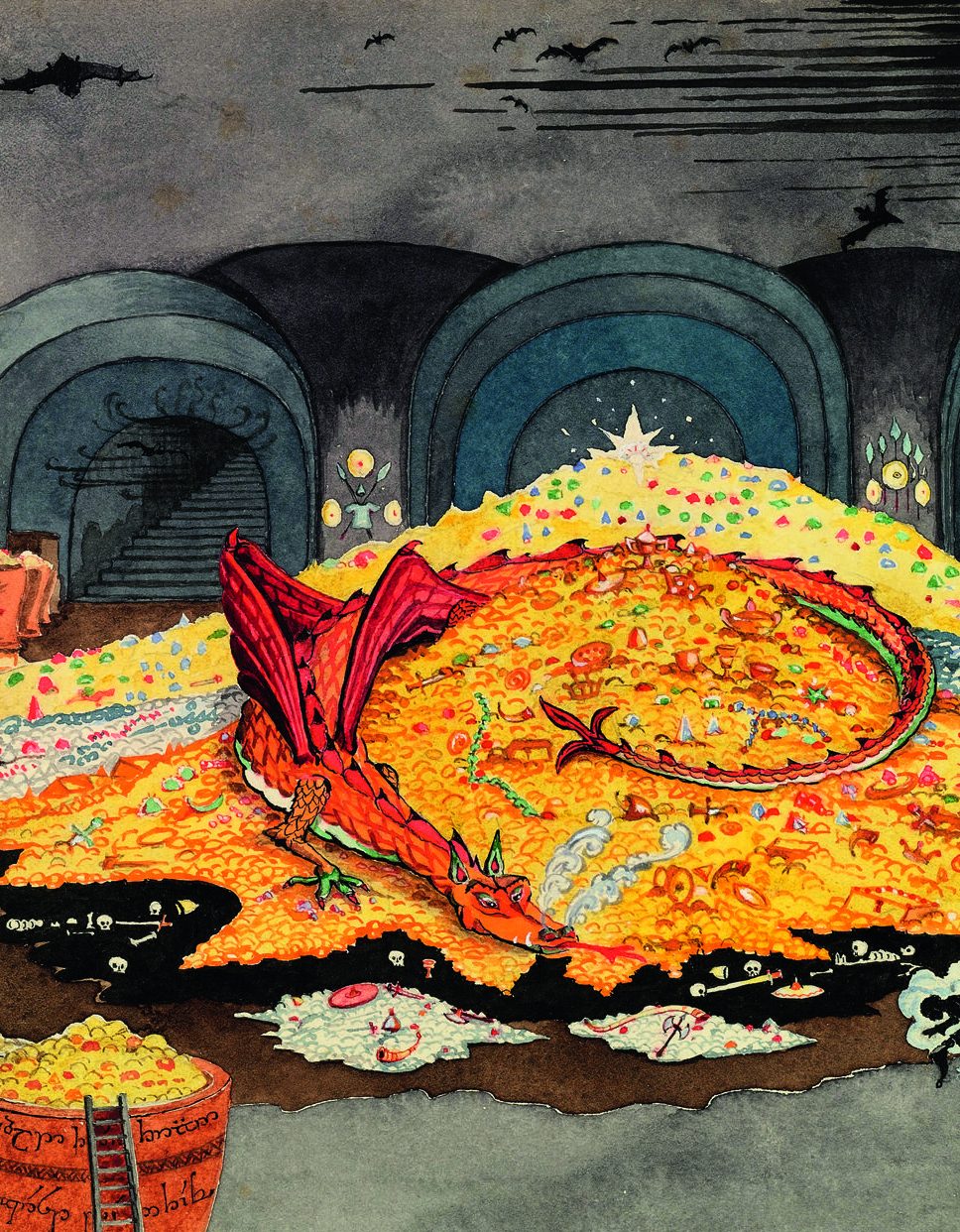
Another notable thing about Tom Bombadil, perhaps the most notable, is that The Ring of Power had no effect on him. This Ring is the femme fatale of the whole story. No one who possessed this Ring could stay immune to corruption by greed and vanity. The Ring was made to be seductive, and only meant for one finger -that of the Dark Lord Sauron.
So, I was indeed baffled to read that there was a character who was unaffected by the magic of The One Ring. Unlike the minds of the men, dwarves, and elves of Middle-Earth, the mind of Tom only made jest with the Ring -like some little toy of no importance. The same Ring that could destroy worlds and had caused the demise of its previous carriers was a cause of laughter and jest for Tom, as soon as he’d seen it about Frodo’s neck.
On the flip side, as the book shows, Tom Bombadil is not some silly empty-headed man. He has great wisdom. Of course, being the Eldest of all, he has the whole story of the world of Middle-Earth. He knew exactly what the Ring of Power was.
But here is an example of one who has knowledge without corruption. And in my opinion, you can only possess that seemingly impossible juxtaposition if you possess innocence in your heart. An innocent heart cannot be corrupted by power or wealth.
If not for the fall of Adam and Eve, we would not always seek the Knowledge of Good and Evil. The irony is that, before the fall, Adam and Eve were wise. They had knowledge. But they had it in the pure state of human nature. Now, our hearts have become corrupted with greed and vanity. We can hardly possess knowledge, honor, riches and power without letting it strip us of our virtue.
But the New Adam and the New Eve have paved a path for us. A path that will lead us to become someone like Tom Bombadil and somebody like Goldberry -even better.
May they Both help us.
To be wise stewards, we must be innocent ones first.
In summary,
This is one of the reasons I think fairytales are important. They give us an example of what a truly good person and life is all about -albeit it fictional. Sometimes, fairytales help us see what it can be hard to see in the real complicated life. The key is that these stories are simple. And the simpler one becomes, the more he or she draws closer to the Ultimate Good, who is God.
Main takeaway: Read about Tom Bombadil! I’d love to know your thoughts about him and Goldberry.

Au revoir,
Christine.





 DREAMS OF TOMORROW
Leave a Reply