
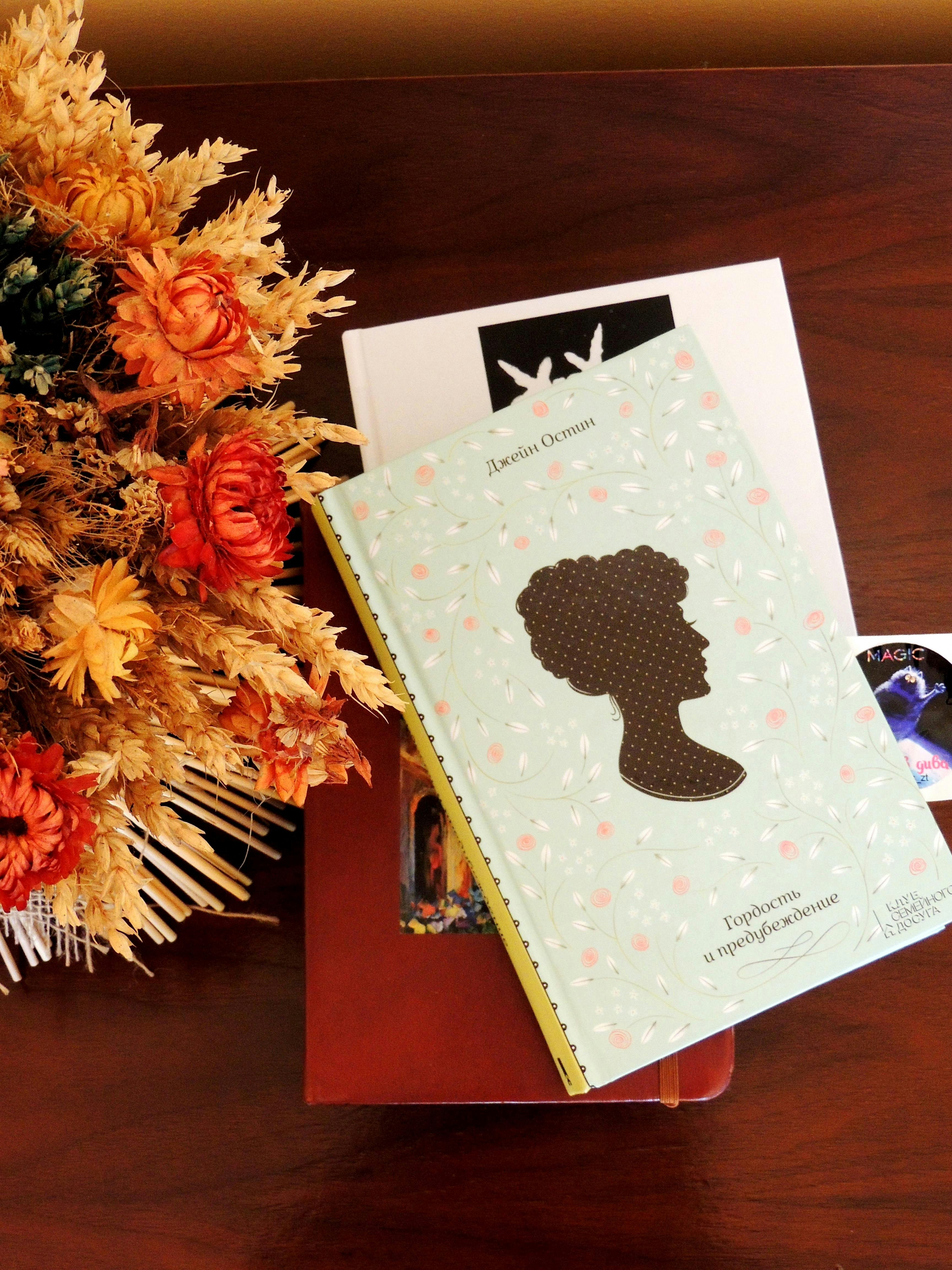
Stories aim to show us how to deal with reality -right before we do.
When I was a girl, I was told many stories, and when I became a young woman, I started telling my own stories. One pattern I found with those experiences was that I would immediately identify with one of the female characters, follow her throughout the story’s development, and learn a specific lesson from her own journey -whether the lesson was good or bad.
In this current culture, we are often saturated with audiovisual media. There is a tendency to overlook the influence of stories and their characters in our lives. If a story is told well, readers (female readers, especially) can emotionally bond with characters, much like the way they’d bond with real people. And what happens when you bond? You pick up some character traits from the other person. The saying goes, ‘You are the average of the five people you spend the most time with’. And I would say, ‘You are the average of the five characters you spend the most media time with’.
Most cultural revolutions in the past started with the press and media. Think newspapers, magazines, television, websites, journals, and books. To perpetuate revolutions, all these outlets had to tell a single narrative, and over time, people just picked up that narrative, not necessarily because it was true, but because those outlets were able to elicit an emotional relationship with their respective consumers.
Since we are talking about women -as always- the most potent way of getting to our hearts is via literary narratives, whether they are fiction or non-fiction. Stories and female characters are important in a woman’s life. Many girls -like me- grew up trying to emulate their favourite female characters. For some, that would’ve been Cinderella, while for others, Barbie would’ve been their imaginary best friend. Our personalities might’ve almost been one with these characters -that is, before coming of age, when the real self starts to crack out of the shell. But even beyond youth, women’s view of themselves and the world continues to be shaped by female characters from stories.
And that is exactly why we need to choose the female characters we study, with the same carefulness we choose our friends -because they do matter. A good female character shows strength through her femininity, not as a caricature or mockery, but as a genuine picture of what it means to go through life as a woman. Even if that character ends up in demise (i.e., is a villain), women still have something to learn from that cautionary tale. Whatever a story does, it should portray women as we truly are: Our beauty, desires, fears, ugliness, goals, and femininity. Our essence should be validated, and it should help us learn something new about ourselves. That, in my opinion, is my definition of a wholesome female character, whether or not she is a villain or a heroine; major or minor character.
With that being said, let’s dive into my top five female character recommendations and why they are good characters to study!
One: Kristin Lavransdatter (by Sigrid Undset).

Sigrid Undset’s moving trilogy, set in medieval Norway and following the life of a fictional maiden called Kristin Lavransdatter, is a lesser-known work of fiction in the English-speaking world. Nonetheless, the story sheds a glaringly accurate light on the experiences of every girl, whether as a child, a coming-of-age lady, or an adult woman. Kristin is a normal maiden from a farming family who grows up at a time when Christianity in Norway was only a budding phenomenon. Having grown up in a faith-filled environment, she knows and at least wishes to live her Catholic faith as best as she can, but as she blossoms into a young woman, she finds the thorns of the world constantly snagging against the white garment of her soul. Her desire to experience outer society and its charms leads her into an illicit affair with a handsome knight, Erlend Nikulaussøn, while being formally betrothed to another man. After many years of fighting with her father’s wishes for her, she marries Erlend and later lives as his wife and a mother to their seven sons. Kristin, throughout her life until old age, goes through many crosses that come with raising children, managing a home, and maintaining her local society; religious scruples attack her too, as she seeks to repent from her former ways and become a true Christian woman as God had always intended her to be.
As a heroine, Kristin is a passionate woman. She lives by principles that she believes in, and even when she goes astray, she always manages to keep the light of her conscience burning. Despite that, however, her initial naivety and love for the world became her downfall, both of which all women should watch against.
Women are not the only members of the human race who are tempted to love the world and its messages, but in the 21st century, the world does tempt us in unique ways. True femininity is not a popular trend now, and for some women, it can be hard to resist the message. These days, the media portrays women as just another masculine being, and all the quirks that come with being a woman (our fertility, receptivity, nurturing nature, etc.) are thrown out the window. Therefore, we end up giving in to these fears just so we can belong.
A woman’s greatest fear is to be excluded from the clan, and I experience this fear myself every blessed day. But if there’s anything we can learn from studying Kristin Lavransdatter, it’s that following the world leads to no pot of gold. Be who God truly wants you to be as a woman, and ask Him for the grace to resist desires for the world’s appraisal -because in the end, it doesn’t matter. Not at all.
And that leads us to our next personage.
Two: Lucy Pevensie of Narnia (by C.S. Lewis).

This mention might not come as a surprise to you. Lucy Pevensie from Lewis’ children’s book series, The Chronicles of Narnia, is a beloved character among people of all ages.
As many can probably relate to, Queen Lucy the Valiant is most loved for her innocent yet brave outlook on the world. She embodies that childlike charm most people lose as they grow into adulthood.
In case you haven’t (yet) been acquainted with The Chronicles of Narnia, the overarching story follows the history, development, and conclusion of the mythical world of Narnia through the lens of its characters. The most prominent and remembered of those characters are a group of four siblings, the Pevensies, who contribute to the story from the second instalment of the series, The Lion, the Witch, and the Wardrobe, to the very last.
For a time, Peter, Edmund, Susan, and Lucy Pevensie rule Narnia as graceful monarchs. While each sibling is identified by a striking quality, Queen Lucy remains the most beloved among them. Being the youngest, she demonstrates the beauty in quiet and humble leadership. Unlike her brother, High King Peter, she doesn’t call the shots, but she basks in the role of encouraging, guiding, and supporting her siblings and the rest of Narnia in whatever trouble they have to deal with. Queen Lucy is far from many of today’s heroines, who are mainly portrayed as defying the status quo and not being ‘like other girls’. But Lucy shows us that there is charm in loving your duty, however small and insignificant it may seem, compared to that of others. Her humility, in fact, is the perfume that always delighted and attracted Aslan the Great like a well-petitioned prayer.
In our own lives, the virtue of femininity and humility can be practised in the short, insignificant times of life, and God will be pleased to see us be like Queen Lucy.
Three: Éowyn (by J.R.R. Tolkien).

Tolkien’s masterpiece of a trilogy, The Lord of the Rings, continues to captivate and inspire readers over decades and from all over the world. Personally, I always find myself drawn to his female characters, which, as most people might agree, he crafted very well. It is quite rare to see strong female characters shown without stereotyping them, and Tolkien had his ways of doing that.
This article could have featured Galadriel, Arwen, or Goldberry in place of Éowyn, but I’ve decided to talk about the latter because many women today would like to relate to this type of woman -who is brave, beautiful, resilient, caring, and feminine all at the same time.
As a summary of this character, Éowyn is a noblewoman of Rohan, a kingdom in Tolkien’s mythical Middle-earth. In order not to get into the story’s intricate geopolitics, it suffices to note that Éowyn’s major role in the story was to care for her uncle, King Theoden, and to look after her people during the brutal war of Lord Sauron.
Her fiery love for her kingdom and people led her to take up arms and sneak into battle, disguised as a soldier. In the end, this action led to one of the most significant moments in the whole story, where she defeats one of the attacking enemies and makes her iconic statement, ‘I am no man.’
This statement, I think, sums up her whole character. Éowyn is a mother to her people, and whatever she has to do to protect them, she will do. She is a feminine maiden when she needs to be, but is not afraid to turn into a she-bear when the time is appropriate. And that is what a truly rounded woman looks like.
Women today have been so stereotyped, either as frilly, delicate creatures or ferocious, angry beings, that it can be so hard to recognize our role in the world. However, as Éowyn shows us, a woman’s innate femininity should move her to care for her loved ones -no matter how that may look in different seasons of her life. The point is to be well-balanced, acting and reacting as one should in various aspects of life without compromising on femininity. When the time calls, a woman should nurture, and when the time calls, she should fight. Irrespective of what it is, she should always recognize who she is and why she is doing what she’s doing.
I am no man means that in this war, I’m fighting with something different than the soldiers -not out of pride, but of humble grace. They bring what they have, and I bring what I have. Together, we win.
That, my friends, is a good woman you have there.
Four: Esmeralda (by Victor Hugo).

The tale of Esmeralda is more of a cautionary tale, but as I’ve said before, there is still something to learn from such stories.
Victor Hugo’s classical novel, The Hunchback of Notre-Dame, portrays a good lot of the religious, social, and political atmosphere of medieval France, but amidst all that, a poignant story unfolds with three major characters in the centerpiece: Claude Frollo, the Archdeacon of Notre-Dame; Quasimodo, his deformed assistant and the bellringer of the Notre-Dame cathedral; and Esmeralda, a young gypsy girl who dances on the streets of Paris for a living. The Hunchback of Notre-Dame mainly chronicles the intellectual and mystical pursuits of self-righteous Frollo and his struggles between lust for Esmeralda and justice against immorality on the streets of Paris.
Esmeralda, on the other hand, is a teenage girl with no direct family and whose means of living comprises street-dancing and superstitious practices, which would’ve been associated with gypsies at the time. Esmeralda naively falls in love with the captain of the Parisian guards, Phoebus, who himself is betrothed to another woman. When a night of an illicit affair leads her to court, Esmeralda ends up in the den of the justice minister, Claude Frollo, who, all the while, has been arranging to fulfill his lustful desires for her. The gypsy girl rejects Frollo’s indecent approaches, even unto the moment he has her hanged; but in the end, she never realizes her naive infatuation for Phoebus, and dies not knowing the difference between true and false love.
Esmeralda was only sixteen years of age. Hence, her internal conflict is similar to that of many young ladies today, who confuse infatuation and lust with love. Her tragic story teaches us women to keep our hearts and minds guarded against impure loves and desires -even when the man in question is as handsome as a Parisian guard.
The Disney remake of Victor Hugo’s classic showed Esmeralda in a happy ending with Captain Phoebus, but Hugo himself shows us that real life is often less of a fairytale than we think.
Five: Sophie Hatter (by Diana Wynne Jones).

Studio Ghibli films are renowned for their incredibly real and virtuous female characters, and their 2004 animation, Howl’s Moving Castle, which is based on a novel by Diana Wynne Jones, is certainly not an exception.
Howl’s Moving Castle is a futuristic fantasy telling the story of a beautiful but insecure hat-making girl, Sophie, whose mundane life is suddenly transformed by an otherworldly reality after she is turned into an old lady by a jealous witch.
As she crosses paths with the young wizard, Howl, and helps him battle his personal and vocational struggles, Sophie’s journey is one of self-contentment, sacrifice, forgiveness, and true love. Despite her cursed condition, she was always more concerned for others. She learns to love herself, her neighbour, and her circumstances, and not only did that break her curse, but it also bettered the lives of her friends -including and especially Howl.
As a Catholic, I may not have resonated with the preternatural and occult-looking atmosphere of Howl’s character, but Sophie’s character, I admit, was inspirational. Instead of resentment, gratitude for God’s gift of ourselves, our neighbours, and our society is worth practicing, even when hard times don’t seem to call for it. Sometimes, the best way to fix something is to be thankful for other things you have that are not broken.
If you haven’t yet seen this renowned Hayao Miyazaki film, I would recommend you add it to your watch list right now!

There you have it,
My top five favourite female characters of all time. Of course, I have many more, but who doesn’t?
Now, I pass the pen over to you: Who are your favourite female characters (film or book), and what makes them attractive to you?
Would love to hear your thoughts!

Au revoir,
Christine.


Leave a Reply